Showing posts with label cosmetics. Show all posts

Saturday, October 24, 2015

What's Scarier, The Halloween Costume OR The Allergic Response?

We are nearing Halloween.  Did you buy a costume yet?  If you haven't, it would be worth your time to consider which costumes and makeup use the most safe ingredients. Many Halloween costumes and makeup contain chemicals that are toxic for everyone....allergy or not!


WebMD predicts that approximately 10% of the people will experience an allergic reaction to cosmetics in their lifetime.  Parents need to carefully consider that the quality of Halloween cosmetics is more important than a low price.  The lower the price for Halloween cosmetics, the greater the risk that toxins may be present.


HealthyStuff.org tested many Halloween costumes and related products.  And the findings were interesting:

"We found that seasonal products, like thousands of other products we have tested, are often full of dangerous chemicals," according to Jeff Gearhart, research director at HealthyStuff.org. "Poorly regulated toxic chemicals consistently show up in seasonal products. Hazardous chemicals in consumer products pose unnecessary and avoidable health hazards to children, consumers, communities, workers and our environment."
Our testing found heavy metals and other additives are commonly found in Halloween costumes and accessories. These chemicals include lead, flame retardants, tin compounds and phthalates -- harmful chemicals that are linked to asthma, reproductive problems, developmental and learning disabilities, hormone problems and cancer.


Halloween costumes and makeup may contain lead, bromine (brominated flame retardants), chlorine (vinyl/PVC plastic), phthalates, arsenic, and tin (organotins). 


What Kind of Allergic Response Can Happen 

With Halloween Costumes?

Mayo Clinic, reports that allergic contact dermatitis happens when a person comes into regular contact with a substance they are sensitive or allergic to. In the case of Halloween costumes, metal accessories that rub on the skin could present a problem for some people.  This also must be considered for Halloween makeup, which goes directly onto the skin (the largest organ in the body).
In other words, parents really MUST consider the quality of the products they choose for Halloween costumes and accessories. One other tip MayoClinic suggests is to wear such accessories over clothing (to avoid skin contact) or to avoid purchasing such items at all.


Halloween Makeup Risks


Makeup
Joel Schlessinger ia a board-certified dermatologist and RealSelf.com adviser.  Schelssinger says that costume makeup often contains artificial dyes, fragrances, waxes and oils, all of which can clog pores, cause breakouts and irritate skin.
"Theater makeup is made with higher quality ingredients and has less risk of skin irritation. Most theater makeup has the same high pigment payoff, but it's designed to sit on the skin for long periods of time and tends to be gentler on skin. These cosmetics are also FDA-approved and free of harmful ingredients like lead"
  As with any unfamiliar makeup, you'll always want to perform a patch test on your neck or the underside of your arm to make sure you won't have a negative reaction," he added. "If you see signs of irritation, avoid putting the makeup on your face. Don't hesitate to see a doctor if the costume makeup gives your skin an itchy or blistering rash."

P.S. from Pam-Iron Oxide is one of my allergic trigger ingredients.  MOST cosmetics and makeup contain Iron Oxide as the coloring agent.  So if you have the same allergy as I do, AVOID Halloween makeup!!! The same goes for face painting.


Alternatives would be to use paint and pencils made from clay or other natural ingredients, or make your own.


Adhesives/Glues
 Answer this question: Would you put Crazy Glue or Elmer's Glue on your face? NO way!  Those glues can damage your complexion.  Buy only glues and adhesives that are approved for stage and theater use. When you apply fake eyelashes, be careful to keep the eyelash glue out of your eyes AND to avoid gluing your eyelids shut. A surprise trip to the emergency room would certainly ruin Halloween!


Fake Blood and Skin
Fake blood is often made with red dye and a petroleum base that can cause irritation to the skin. A better bet would be to make your own fake blood by using corn syrup, flour, and food coloring.
As far as fake/prosthetic skin, you can avoid skin irritation by buying higher quality theater props. The fake skin or prosthetics you will find in the party store will probably cause irritation.  Be aware that most of these products contain latex.  So be sure you aren't allergic to latex before you buy them.


Read more of Joel Schlessigner's advice here.

Do you want to check to see some of the costumes HealthyStuff.org tested?  Use this link. 


Have a happy and healthy Halloween!


Saturday, August 22, 2015

My Favorite Things for Nickel and Iron Oxide Allergy

Whew! What a week!  I just finished my first FULL WEEK of teaching Kindergarten (this year). Trying to get 23 four and five year olds how to be "civil" students is quite a huge task.  I never get used to the start of the school year in Kindergarten.  It truly makes me think of herding cats!


"How are we gonna get all these situations?"


Oh, Sorry!! I am off topic.
Yes, that is how my mind has been running all week.


I Decided To Think Of My Favorite Things 

For Nickel and Iron Oxide Allergies 


Naturally Nickel Free Jewelry

Donna Jo Wallace is the artist who creates earrings, necklaces, bracelets, and charms that are nickel-free.  Donna even offers custom design jewelry pieces.  She made custom earring charms for me, which I LOVE!


100 Percent Pure

I love the Fruit Pigmented Cosmetics offered by 100 Percent Pure! God was good to me in advance of my diagnosis of nickel allergy.  This site appeared in my Facebook news feed a couple of weeks before my allergy testing. I am so grateful that I now have some cosmetics I can wear.
NOTE: If you have exclusively nickel allergy, cosmetics may not be an allergy trigger for you.  But if you have IRON OXIDE allergies, like I do, you need to find alternatives to the big name cosmetics, as well as to the "natural" brands.

 I use Fig eyeshadow, which also can serve as my liner.  And Champagne is my lighter color.


I enjoy the Pomegranate lip glaze.  It is a bit light, but when I use a lip liner, it is just right. The circle sample makes it look more pink than it actually is. These lip glazes so NOT have the lasting power of regular lip sticks or glazes.  Sorry!  


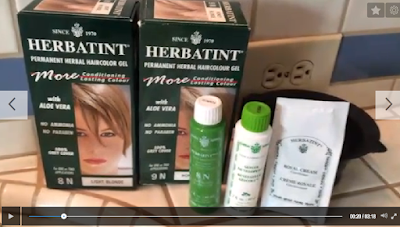
Herbatint Hair Color

When I realized my Nickel/Iron Oxide Allergy was impacted by the hair color that I use each month, I was horrified.  I could not imagine going without coloring my hair! Even most of the "natural" hair coloring products include Iron Oxide.  So when my friend Terrie, the health food store owner, told me about Herbatint, I was very interested, but leery. I wasn't sure this product could do the job. 

I was extremely surprised at how wonderful Herbatint did the job! I wouldn't go back to the traditional hair color now, even IF I could! Even my beautician commented on the improvement of the condition of my hair, now that I am using Herbatint.  I get many more compliments on the shiny look it gives my hair.  


The Grain Brain by Dr. Perlmutter


Renowned neurologist David Perlmutter, MD, blows the lid off a topic that’s been buried in medical literature for far too long: carbs are destroying your brain. And not just unhealthy carbs, but even healthy ones like whole grains can cause dementia, ADHD, anxiety, chronic headaches, depression, and much more. Dr. Perlmutter explains what happens when the brain encounters common ingredients in your daily bread and fruit bowls, why your brain thrives on fat and cholesterol, and how you can spur the growth of new brain cells at any age. He offers an in-depth look at how we can take control of our “smart genes” through specific dietary choices and lifestyle habits, demonstrating how to remedy our most feared maladies without drugs.


My Kineseologist/Chiro recommended that I read this book after I told him about my diagnosis of Nickel and Iron Oxide allergy.  The basic reason is because this allergy is likely a result of inflammation of the brain due to gluten and too much sugar.  Perlmutter also writes about the importance of getting a LOT more healthy fats into our diet to promote health.

After eating Gluten-Free for 5 months, many of my most extreme areas of inflammation have cleared up tremendously!  I hope to continue a Gluten-Free diet from now on.


I have met quite a few other Nickel allergy sufferers who also discovered that Gluten-free living helps with their symptoms. So I am not alone.  In fact, I decided to focus on Gluten-free eating versus the Nickel Avoidance Diet.
Read more about my story toward Gluten-Free living here.


Note: I am STILL going to try to avoid touching items with high Nickel and Iron Oxide content.


Pamela's Dark Chocolate Chunk Cookies

I know, I know!  These are NOT sugar-free.  But when I need a cookie and chocolate fix, these do just fine!


Coco Roons (Costco) 

Oh........My...........Gosh!!!! These are just so good!


Ugly Gloves

When I just can't avoid touching nickel, I still enjoy my gloves.  These gloves allow me to handle paper, turn pages, pick up pens, write, and so on.  I just can't answer my cell phone, or work on the computer keyboard with them.  But they work just fine when I need them.


OK, I guess I've cheered myself up by thinking of my favorite things.  Maybe I need to burst into song..............


Thursday, June 11, 2015

What?? I'm Allergic to Hair Dye?

After I was diagnosed with severe allergies to Nickel & Iron Oxide, I realized that most cosmetics with color, including hair color have Iron Oxide. Yikes!  I am about 65% white/gray!  I survive by using hair color!  Is THIS the point in life when I would finally let my natural hair color take over?


I have colored my hair since I was around 26 years old, and now I am.... ummm.... well let's just say I'm in my 50's.  At the beginning, I would go to my beautician for a professional color job with highlights.

As the years went on, I needed to color more often.  And so for the price consideration, I decided to color my own hair with permanent color from the beauty supply.  I haven't ever used the coloring products available in the drugstores, they are pretty harsh on hair.


About 12 years ago, I started experiencing blisters on my scalp and around my hairline. These would appear right after I finished coloring my hair. I've also shown a flare up of rosacea on my cheeks immediately after coloring.  Little did I realize these were early signs of my iron oxide allergy.

It is important to realize blisters and allergic reactions to hair dye will increase in severity if there is continued exposure.  So it really IS important to pay attention to your body's signal!


Searching for Alternatives & Help


I contacted a beautician who helps people treat their hair with more natural products.  He recommended adding about a 1/2 tsp of Polysorbate-80 to my Wella hair color.  It is a healthy product that is added to foods like ice cream and is also used in many hair growth and management products.  Amazon sells Polysorbate-80 for $20 or less.


But eventually I had to make further changes in the hair coloring products, because I needed to avoid Iron Oxide.  So the search began.


There Are Healthier Alternatives for Coloring Hair


http://www.allergictohairdye.com/ offers some great info and alternatives to the hair color I had been using.  But ultimately, I've found iron oxide is included as one of the ingredients for those brands also. Henna is too difficult because I would have to wear the color and wrap my head for up to 6 hours. No way!


My dear friend, Terrie, owns a health food store. She recommended Herbatint hair color.  I was hesitant, but tried it. 

 The Results....

I absolutely LOVE Herbatint!  My hair color is warm, the texture is soft (for once), and it is shiny (finally!)


http://vid880.photobucket.com/albums/ac10/kinderkapers/Mobile%20Uploads/2015-06/25070223-C7A0-4E7E-AD3F-D891ACFF122A_zpshe0ehcv6.mp4

Click HERE to watch my video about Herbatint


And just as important - many others have complimented me on the color and texture of my hair since changing over to Herbatint. My beautician is amazed at how much softer my hair has become!  My coarse horse-hair has a lot less frizzies sticking up like tiny antennae.


 photo 1622a227-945b-480b-a6c9-2d8b8209eaf2_zpsooycargx.jpg

Take a look at the ingredients used in Herbatint: 
Haircolor Gel: laureth-5, propylene glycol, water, peg-2 oleamine, ethanolamine, walnut extract, rhubarb extract, cinchona extract, aloe extract, meadowfoam extract, birch extract, cetrimonium chloride, echinacea augustifolia extract, hamamelis virginiana extract, sodium sulfite, ascorbic acid, tetrasodium edta, resorcinol, m-o-p aminophenol, 2 amino 3 hydroxypiridine, p phenylenediamine.Glycol Developer: water, hydrogen peroxide, etidronic acid, cetrimonium chloride. Royal Cream


I am convinced and will stick with Herbatint from now on.  In fact, I recommend it for anyone who wants to bring healthier habits into their lifestyle!  One woman I know brings Herbatint to her hairdresser, so it is applied in the salon.


Herbatint can be purchased at health food stores, and stores such as Whole Foods.  It is also available at Amazon and Vitacost.

(This is an unpaid, unsolicited review)


Monday, June 1, 2015

Airbrush, Sunless Tanners and Nickel/Iron Oxide Allergies


Today we returned from our annual weekend at the beach.  My parents, my sister's family, and my family all go to Cayucos, California on the Central Coast.  It's a great time together.  And believe it or not, my 79 year old mom and 80 year old dad get in their wetsuits to boogie board with the rest of us!


 photo 6749074D-339C-4914-830B-CDBEBE9F8064_zpsrsi6hrru.jpg


In the past 10 years, I always got very inflamed cheeks.  The skin on my cheeks would get hot and puffy.  In the early years, I thought it was a sunburn. But I eventually figured out I was having an allergic reaction.


So I started using zinc oxide as my waterproof sunscreen.  It was a fun purple colored sunblock. But I STILL had a bad reaction. Now that I KNOW I have an allergy to Iron Oxide, I realize the ingredients that created the purple color was the irritant.  There are lotions that are pure zinc oxide that would work great for me. I also believe there is some Iron Oxide in the sea water that is an irritant to my face.  


For the past 2 years, I decided to limit myself to just one day of boogie boarding, compared to 2 days in the past.  That helped quite a bit. In addition to that, I bought swimming goggles to provide further protection for my eyes.  This year I completely skipped sunblock.  And after 2 hours in the water, I had a great time with no allergic reaction!  Wahooo!!!


Here is a photo we took at the end of the day, look at my happy eyes & cheeks! Believe it or not, this is a big improvement over the past years.


 photo F6F2F565-11BE-4DF2-91FA-F5181AEFFD55_zpsqeq2jwrj.jpg

In the past, I have used sunless tanners and tinted sunless tanners on my legs.  Now I'm realizing that Iron Oxide is the key ingredient that provides the color in the tinted sunless tanners! Bad news for me!


Having an Iron Oxide Allergy means re-thinking the way you get your Summer tan! Just think of it this way...if it deposits cover on your skin, it will have Iron Oxide.


In an earlier post, I wrote about how nickel and iron oxide are basically the same thing. So IF you have a nickel allergy, consider whether Iron Oxide will also be an irritant to your skin.
Sunless tanning products also contain bronzers that come in all different forms and colors. They may be blends of F, D, &C, (food, drug and cosmetic) water soluble dyes, iron oxides, (the different colors of rust formed by the oxidation of ferrous metals), or natural sources such as carmine, a pigment made from carminic acid, found in cochineal insects such as beetles. http://www.airbrush-tanning.us/faq1.htm


Dr. Mercola talks about Why Sunless Tanning Can Be Dangerous:
Sunless tanners contain a lengthy list of chemical agents — up to 45 in the case of spray tanners. Many of these agents have never been studied for their long-term effects on human health, because the FDA does not systematically review the safety of personal care products. Since testing is voluntary and controlled by the manufacturers, many ingredients in cosmetic products are not safety tested at all.
One of the main ingredients in spray tanning solutions is dihydroxyacetone, a color additive that darkens your skin by reacting with amino acids in your skin's surface layer. Dihydroxyacetone is often abbreviated DHA (which should not be confused with docosahexaenoic acid, the healthy omega-3 fat often given the same abbreviation). Sunless tanning products often contain between 1 and 15 percent DHA; the higher the DHA level, the darker the tan produced.
Manufacturers of sunless tanning products claim DHA is a simple carbohydrate sugar solution, but some toxicologists disagree. Part of the problem is that the U.S. government's regulations for DHA allow contaminants such as lead, arsenic and mercury.
A report by the National Toxicology Program1 suggests the risks of DHA remain unclear, pointing to some evidence that DHA may be a mutagen that could induce breaks in DNA strands, which could contribute to accelerated aging and even skin cancer. Another issue is absorption through your skin. You shouldn't put anything on your skin you wouldn't feel safe eating.  

In fact, earlier this year a panel of medical experts reviewed 10 scientific studies on DHA and concluded the use of DHA-containing spray tans may cause genetic alterations and DNA damage that could lead to cancer and chronic lung diseases when inhaled.2 Sunless tanning sprays have even been found to inhibit your skin's ability to produce vitamin D, as the dark layer on your skin produced by the DHA results in the prevention of UVB absorption, thereby inhibiting vitamin D production.
 http://articles.mercola.com/sites/articles/archive/2013/02/09/sunless-tanning-lotion.aspx

So I guess I will be sporting pale skin this summer.  Good thing I have an olive tint to my color naturally!  

My favorite skin treatment for summer is coconut oil.  It seems to make my skin look a bit more tan.  Enjoy these summer days!


Friday, May 22, 2015

Are Nickel & Iron Oxide the same thing?

I must admit that I am not a chemistry student.  Nope, in college, I took Physics instead.  So I don't have a big understanding of the periodic table and how elements work together, what comes from what, and so on.


When my allergist discussed the results of the 5 day allergy test, she said I was severely allergic to nickel and iron oxide.  I didn't know if nickel and iron oxide were different names for the same thing. Every time I would Google this question, the results were all directed toward the chemist.  I couldn't understand what those sites were stating. I kind of gathered that nickel and iron oxide are somehow connected, yet different.  


Here is an example of the results for a search for how is nickel iron similar to iron oxide:
http://pubs.acs.org/doi/abs/10.1021/cm501881a

 BUT the great part is that the author uses the phrase "nickel iron oxide"

Mixed nickel iron oxide nanomaterials have great potential for use in fields as wide-ranging as optics, water oxidation catalysis, and biomedical applications


So it seems that nickel and iron oxide are the same thing.

Well I recently found some answers to my questions about nickel and iron oxide. 


Iron is a metallic element with the chemical symbol Fe, and is one of the most prolific and commonly occurring mineral substances on Earth. Scientists estimate that is found in approximately 5% of the planet’s crust, and exists in its core, too. Iron turns to iron oxide when it comes into contact with oxygen, either on its own or in combination with other elements like water. When the mineral is exposed to water and air for extended periods of time it will usually produce rust, which is a reddish-brown oxide.

           http://www.wisegeek.org/what-is-iron-oxide.htm


 Nickel is classified as a transition metal. Transition metals are elements between Groups 2 (metals) and 13 (non-metals) in the periodic table. The periodic table is a chart that shows how chemical elements are related to one another. Nickel is closely related to iron, cobalt, copper, and zinc. These metals are close to nickel in the periodic table.


http://www.chemistryexplained.com/elements


Some people have combination allergies (ME!)

People with nickel allergy may also be allergic to iron oxide, gluten, soy, latex, aluminum, and other items.  If you have an allergy to nickel, you might also check to see if you are allergic to iron oxide.

When do I risk exposure to Nickel?

Nickel is used for nickel alloys, electroplating, batteries, coins, industrial plumbing, spark plugs, machinery parts, stainless-steel, nickel-chrome resistance wires, and catalysts. It is also found in objects used daily: zippers, watchbands, jewelry, musical instruments, belt buckles, razors, and kitchen utensils.


When do I risk exposure to Iron Oxide?

Many cosmetics include Iron Oxide, as a way to provide the coloring agent. Face makeup, hair color, ink pens, erasable markers, paint, tattoo ink, laptops, magnets, fertilizer, and more.
http://householdproducts.nlm.nih.gov/cgi-bin/household/brands?tbl=chem&id=449


So if you have nickel allergy, have taken care to eliminate daily exposure, but STILL have skin irritation, THEN take a minute to consider whether iron oxide is also an irritant. That is the case for me, and it turns out my iron oxide allergy has been an equal contributor to my chronic conjunctivitis and rosacea.  And my whole daily routine with cosmetics has changed as a result.

I would love to hear about your experiences with skin allergies.  Just leave a comment below.


Saturday, April 25, 2015

Tattoos, Nickel Allergy, Reactions, & Safety

Tattooing has increased in popularity and many young adults consider it a form of body art. The Pew Research Center found that 36% of Americans ages 18-25 have a tattoo.


Tattoos are often associated with body and design art. Yet it is also popular as a way to achieve permanent cosmetics. Permanent eye liner and lip liner techniques implement the same materials and supplies as the body design tattoos. 

http://livingwithnickelallergies.blogspot.com/


Dermatologists are finding an increase of complications such as allergic reactions, serious infections, and reactions to tattoo ink.  Some allergic reactions can mimic skin cancer. 


 So What Is The Body Trying To Accomplish

When It Has An Allergic Reaction?


An allergic reaction is somewhat like a case of mistaken identity within your body's immune system. Normally, your immune system reacts to protect your body against bacteria, viruses or toxic substances.

If you have nickel allergy, your body reacts to nickel and possibly to other metals, such as cobalt and palladium. In other words, it's mistakenly identified nickel as something that could harm you.

Once your body has developed a reaction to a particular agent (allergen) — in this case, nickel — your immune system will always be sensitive to it. That means anytime you come into contact with nickel, your immune system will respond and produce an allergic response.

Your immune system's sensitivity to nickel may develop after your first exposure or after repeated or prolonged exposure. The cause of nickel allergy is unknown, but sensitivity to nickel may, in part, be inherited (genetic). 
Source: The Mayo Clinic


Tattoo Ink Allergy and Reactions


http://livingwithnickelallergies.blogspot.com/


Tattoo ink allergy and reactions occur for some people & it is something to consider when getting a tattoo. Reactions commonly come from the pigments used in the ink.

There are a variety of heavy metals that are often used as pigments and some people react to those ingredients. For example, red is a color that is more likely to give allergic problems than others.

tattoo ink allergy reaction

What is in Tattoo Ink?

There are 2 basic parts that make up Tattoo Ink

  1. Pigments to give it color (iron oxides, plastics, mercury, cadmium, nickel, zinc, titanium, iron, and many others)
  2. Carrier to keep the pigment in suspension to carry it into the dermis and to act as an anti-bacterial/anti-viral agent (alcohol, water, methanol, propylene glycol, glycerin and witch hazel)
 Typically, the pigments are the components that cause people to experience allergic reactions to a tattoo.

Causes of Allergy and Reactions from Tattoo Ink

While allergic reactions to tattoo ink my vary, the most common problems are related to the heavy metal pigments. So if you have an allergy to nickel, copper, iron, iron oxide, and so on, you will probably have a reaction to the tattoo.

Black is most commonly achieved from carbon. Sensitivity to carbon is rare. Other sources of black tattoo color may be found in black ink and logwood. Neither of these are metal derivatives, however, the black waterproof ink contains phenol solution in which charcoal particles are suspended and may be the source of other reactions.

Red pigments come from mercury. It is estimated that between 1 and 5 percent of the general population are allergic to mercury.

Yellow pigments is often made by using cadmium. And this ingredient may cause eczema type reactions for some people. And some people have allergic reactions when the cadmium is exposed to light.

Cobalt is used for the blue pigments. Some people experience hypersensitivity and reactions to this ingredient.

Chromium is used for green pigments and causes eczema type reactions for some people.

Maganese is used for purple tattoo designs. Some people have experienced tattoo granulomas when they are allergic to this ingredient.

While allergic reactions are hard to predict, please ask your tattoo artist to conduct a test patch prior to getting the entire tattoo.  


http://livingwithnickelallergies.blogspot.com/

Be Aware that MRI Exams May Cause 

the Metals in a Tattoo to Temporarily Burn or Sting 


Types of Reactions from Tattoo Ink


Some skin diseases may flare when insulted by local skin injury. Psoriasis may flare locally at the tattoo site. This is called the Koebner phenomenon.

Tattoo inks are typically derived from metals that may cause a wide array of skin reactions. While these can be significant if you are the person affected, they tend to be unusual and affect a limited percentage of the tattooed population.

Patch testing to confirm skin reactions is typically positive for eczematous tattoo reactions, but usually is negative for granulomatous reactions.

Initial reactions from the tattoo include local swelling, redness, bleeding and scab formation. This is expected and considered an acute inflammatory response. It usually resolves within a few weeks. Certainly infection of the open wound is also a potential problem. However, the following are problems that may be seen later on with tattoos, even years down the road:
  • Lichenoid (small bumps or papules of reactive tissue)
  • Sarcoidal granulomas (firm balls of reactive tissue beneath the surface of the skin)
  • Scaling
  • Itching
  • Swelling (often due to a photosensitive/phototoxic reaction)
  • Ulceration (the formation of a sore)
  • Delayed hypersensitivity (a reaction separated by a significant period of time from getting the tattoo, also referred to within the trade as the red reaction)
  • Lymphocytoma Cutis (a skin reaction that mimics lymphoma of the skin and has been associated with tattoos in addition to other causes such as insect bites, some drugs and allergy shots).
 Source: The Science of Tattoos


http://livingwithnickelallergies.blogspot.com/

Skin cancer

Skin cancer can occur within a tattoo, and for that reason Dr. Shinohara explained that tattoo artists need to be careful not to place a tattoo over an existing mole. However, one reaction that can result is a bump that mimics skin cancer, which can ruin the tattoo.
  • This type of bump or lesion that can occur within a tattoo looks like a type of skin cancer known as squamous cell carcinoma. Because the bump is so hard to distinguish from this skin cancer, it requires a biopsy and, in some cases, may need to be treated as a skin cancer, with additional surgery.
  • Dr. Shinohara noted that this unusual reaction is thought to stem from tattoo ink and can result in potentially unnecessary and expensive skin cancer treatment.
 Source: American Academy of Dermatology


http://livingwithnickelallergies.blogspot.com/ 


Safety Precautions in Selecting a Tattoo Artist

  • Does the artist autoclave multi-use items? (This is the best way to sterilize instruments)
     
  • Anything that is autoclaved for multiple use must be sealed and dated to ensure sterility.
  •  Does the artist use single-use sterile disposable needles and tubing?
     
  • Does the artist throwaway leftover ointments, tray, razors, pigments, etc. after completing a tattoo? (Single-use items)
     
  • Does the artist wear gloves?
     
  • Are sterile techniques used during the tattoo process?
     
  • Are needles disposed of in properly labeled containers?
     
  • Does the artist wipe down surfaces with a viricidal/germicidal agent in-between clients?
     
  • Has the artist been vaccinated for Hepatitis B?
  •  
  • Patch testing is recommended if you are concerned about getting reactions. Give the test area enough time to see if a reaction occurs. So this means you will NOT be getting the tattoo on the same day as the patch test. 


In other words, are Universal Precautions performed, just as they would (or should be) in a physician's office?  From an artistic point of view, have you reviewed the artist's portfolio?  Make sure that the tattoos have sharp lines and smooth edges?
Read more here


Important Considerations When You Have 

a Nickel or Metal Allergy

There is no cure for nickel allergy. Once you develop a sensitivity to nickel, you will develop a rash (contact dermatitis) whenever you come into contact with the metal. Once a particular site, such as a tattoo, has reacted to nickel, that site will react even more when re-exposed to nickel.

Tattoos are permanent...no surprise.  But if you have metal allergies, you need to seriously consider all the ways having a tattoo risks your body will continue to react to have metal pigments within the dermis. 


My Personal Thoughts After Learning All This...

My eyes are the area where my nickel and iron oxide allergy is evident.  But I went for 2 years of puffy red and watering eyes before we found out that I have this allergic reaction. Read about my experiences here.


So I continued to wear my eye make up, which contains iron oxides. I after several months, I decided to stop wearing make up and save it exclusively for special events. People often suggested that I skip the make up and just get my eye liner done permanently with a tattoo.  I seriously considered this. But I kept saying I just wasn't sure what was in the pigments used for tattooing, and who would know if I'd react to it.

Thank the Lord I didn't get the tattoo eye liner! It would have been a permanent allergen sitting on my lids!

http://livingwithnickelallergies.blogspot.com/


Other resources:
http://www.tattoomachineequipment.com/tattoo-ink-allergy-and-reactions

http://www.mayoclinic.org/diseases-conditions/nickel-allergy/basics/risk-factors/con-20027616

https://www.aad.org/stories-and-news/news-releases/dermatologist-warns-consumers-about-complications-linked-to-newer-tattoo-inks-

Saturday, April 4, 2015

Piercing Safety, Allergic Reactions, & Infections


Certain factors may increase 

your risk of developing a nickel allergy


Having ear or body piercings. Because nickel is common in jewelry, nickel allergy is most often associated with earrings and other body-piercing jewelry containing nickel. If the first jewelry you wear after a piercing contains nickel, your body is constantly exposed to the metal during the healing time. And people who have piercings often wear jewelry every day. The more piercings you have, the greater your risk of developing a nickel allergy.
                                   Source: MayoClinic


 Tips for Getting Piercings

1. Work with professionals who follows local health department guidelines. That is the best way to prevent infection. Professionals also use procedures to prevent against the transmission of blood-borne diseases, like tetanus or HIV. 

2. Use a properly licensed piercing studio. Your state, county or city health department will have information on licensing requirements for piercing studios.
Avoid  DIY piercing. Doing it yourself or having an untrained friend perform the piercing is unsafe, since you don't have sterile tools and antiseptic procedures are required to minimize the chances of infection.

3. Make sure the piercer uses appropriate equipment. Piercers should wash their hands between piercings and wear a fresh pair of protective gloves for each piercing. Avoid ear-piercing guns because they cannot be sterilized properly (unless they use a disposable piercing gun).  The jewelry used with piercing guns is relatively blunt, causing unnecessary damage to the piercing. When the wrong type of piercing tool is used, corrosion causes the release of nickel ions, which can leach onto the skin. The same goes for studs used while the ear lobes are healing.

4. Make sure that the piercer sterilizes all non-disposable equipment. Professional piercers use an autoclave (a sterilization machine) to sterilize equipment. Piercers should sterilize larger equipment with a commercial disinfectant or bleach solution after each use.

5. Expect your piercer to use hypoallergenic jewelry. Surgical steel, titanium, niobium or 14 or 18-carat gold are appropriate for a new piercing. Avoid nickel, which commonly causes allergic reactions.


General Treatment After Piercing

Suggested Materials:
  • Sea Salt
  • Mild Anti-Bacterial or Antimicrobial Liquid Soap/Wash (Like Provon or Satin)
  • Cotton Balls
  • Cotton-tipped Swabs
  • Small disposable cups (2-4 ounces)


Cleaning Your Piercing:

1. ALWAYS wash your hands thoroughly. Never touch your piercing or jewelry with dirty hands.

2. Saturate a cotton ball with warm water, and gently wipe away any crusty deposits that have gathered around the piercing site. Throw the cotton ball away.

3. Apply a generous amount of liquid soap to your fingertip, and rub onto the piercing site and jewelry. Make sure you get the soap everywhere. Rotating the jewelry is not necessary as long as you work the soap around the piercing and jewelry completely.

4. Rinse the piercing and jewelry several times with warm water, ensuring that all soap has been removed.

5. Dry your piercing with a clean paper towel and then dispose of it.
                                Source: About.com - Piercing Aftercare


Other Healing Aids To Use After Piercing:

  • Coconut oil (has antibacterial properties)
  • Tea Tree Oil/Melaleuca Oil (antibacterial properties)
  • Lavender Oil (antibacterial and soothing properties)
  • Saline Solution made with Sea Salt (NOT iodized salt)


How to Treat An Infected Piercing

If these symptoms last for 2 or more days, it is probably infected:
  • Red, inflamed streaks or marks on the skin that radiate out from the piercing site.
  • Increased pain, redness, swelling, heat, or tenderness around the piercing site.
  • A thick yellow-green pus-like discharge coming from the piercing site. It's normal to see a bit of oozing or bleeding from the piercing which is a sign of healing, but be alert for pus combined with swelling and redness.
  • Swollen or tender lymph glands above or below the piercing. With an ear piercing, you may feel sore and swollen glands in your neck around your jawline.
  • Fever. If you're otherwise healthy (no cold or flu), and you develop a fever, this is cause for concern.
Piercings can become infected shortly after the piercing occurs. AND it can also happen years after the piercing. Regardless, contact your doctor to get treatment for the infection.

Infection or Allergic Reaction?

Signs of an allergic reaction versus an infection include burning sensation on the skin, an expanding wound, and a clear yellow discharge.

PLEASE NOTE: Once you experience an allergic reaction with a piercing, the allergic reaction will always be a possibility. And each time you expose your piercing to that same allergen, the reaction will increase. 

For instance, if you are allergic to nickel, each time you wear jewelry containing nickel, the allergic response will be worse. So the key is to eliminate exposure of the allergen in order to limit allergic responses.

Read about safe metals for piercings here